Quick Answer: A residential switchboard upgrade in New Zealand typically costs $1,500 to $3,500 for a standard home. Swapping ceramic fuses for circuit breakers sits at the lower end, a full upgrade with RCD protection runs $2,000 to $3,000, and larger homes or three phase supply can reach $5,000 or more. Most of the price is labour and certification, not the board itself. These are New Zealand market averages, not a quote from BT Electrical Solutions, so get a fixed quote for your switchboard upgrade before you budget.
What’s in This Guide
- Switchboard Upgrade Cost in NZ (2026 Prices)
- What You Are Actually Paying For
- The Seven Things That Move the Price
- The Costs Most Quotes Leave Out
- What It Costs Around New Zealand
- Do You Actually Need an Upgrade Yet?
- Can You Replace a Switchboard Yourself in NZ?
- Why Your Quote Might Be Higher Than This
- How to Keep the Cost Down
- Why Choose BT Electrical Solutions
- Frequently Asked Questions
Switchboard Upgrade Cost in NZ (2026 Prices)
Switchboard pricing is quoted per job rather than per hour, because the work varies enormously between a tidy 1990s board that needs new breakers and a 1950s fuse box bolted to an asbestos backing panel. The table below covers the range most New Zealand homeowners land in.
| Type of Upgrade | Typical Cost (NZD) | Time on Site |
|---|---|---|
| Basic upgrade, ceramic fuses to circuit breakers | $1,500 – $2,000 | 4 – 6 hours |
| Standard upgrade with RCD protection | $2,000 – $3,000 | 4 – 6 hours |
| Larger home, extra circuits, RCBOs throughout | $3,000 – $5,000 | 6 – 8 hours |
| Three phase supply or light commercial | $5,000 – $15,000+ | 1 – 3 days |
| Emergency or after hours replacement | $2,500 – $4,500 | Same day |
These are industry-wide New Zealand ranges built from publicly available pricing published by registered electricians, not BT Electrical Solutions pricing, and they are current as at October 2026. One number matters more than any table: whether the quote in front of you includes the certificate and the independent inspection. Two quotes $600 apart are often the same job, with one of them leaving the compliance paperwork off the page.
What You Are Actually Paying For
Homeowners are often surprised that the switchboard enclosure is one of the cheapest parts of the job. Here is roughly where the money goes on a standard residential upgrade.
| Item | Typical Cost (NZD) |
|---|---|
| Electrician labour ($80 – $120/hr, 4 – 8 hours) | $640 – $960 |
| Switchboard enclosure | $300 – $800 |
| Circuit breakers (per circuit) | $30 – $80 each |
| RCD units (2 – 3 for a typical home) | $150 – $300 |
| Whole-house surge protection (optional) | $200 – $400 |
| Asbestos testing on older backing boards | $200 – $400 |
| Wall or meter box repair after removal | $100 – $300 |
Market ranges as at October 2026, not a BT Electrical Solutions quote. Your price depends on the factors below.
Labour is the biggest single line, which is why the age and tidiness of your existing installation matters more than the brand of board going in. An electrician who can lift the old board off and land the circuits straight into a new one is on site for half a day. One who has to trace and relabel twenty unmarked circuits first is there for a full one.
The Seven Things That Move the Price
1. How many circuits you have
Every circuit needs its own breaker, and on a modern board often its own RCBO. A two bedroom unit might run 6 to 8 circuits. A four bedroom house with a heat pump, oven, and an outdoor supply to a sleepout can be 15 to 20. At $30 to $80 a breaker, plus the labour to terminate and test each one, circuit count alone can swing a quote by $800.
2. RCDs versus RCBOs
An RCD protects a group of circuits. An RCBO protects one circuit on its own, combining the breaker and the residual current protection in a single unit. RCBOs cost more upfront, and they are the reason a quote might read $3,000 rather than $2,200.
What you get for the difference is fault isolation. With grouped RCDs, a faulty appliance in the garage takes out the lights in half the house and you are standing in the dark working out which circuit tripped. With RCBOs, the one affected circuit drops and everything else keeps running. Our guide to RCD safety switches and how they protect a home covers the difference in more detail.
3. Whether the work touches the mains
This is the factor most cost guides skip, and it can add several hundred dollars. Mains work is classified as high-risk prescribed electrical work under regulation 6A of the Electricity (Safety) Regulations 2010. When it applies, the work must be independently inspected by an electrical inspector who is not the person who did the job, and a Record of Inspection issued before the work is signed off.
If your upgrade only replaces the board’s internals, this may not apply. If the incoming supply, the main switch, or the tails are being changed, it usually does. Ask the question at quoting stage, because a quote that omits the inspection is not comparable to one that includes it.
4. Single phase or three phase
Most New Zealand homes are single phase. Larger properties, homes with workshops, and anything running heavy equipment may be on three phase, which needs a bigger board, more switchgear, and more time. Moving from single to three phase is a separate job again, because it involves the network company as well as your electrician.
5. The condition of the meter box
A new board is usually physically larger than the fuse box it replaces. If the existing meter box is too small, it has to be enlarged or replaced, and that is carpentry and weatherproofing on top of the electrical work. Older boards are also sometimes mounted on asbestos backing panels, which need testing and, if positive, controlled removal.
6. Access and location
A board at chest height in an accessible hallway is a straightforward job. A board in a low subfloor, behind a built-in wardrobe, or on an exterior wall two metres up needs more time and sometimes a second person. Relocating a switchboard to a better position costs more again, but is worth pricing if yours is somewhere awkward.
7. Whether other work is happening at the same time
A switchboard upgrade done as part of a larger job is cheaper per hour than one done on its own, because the callout and setup are shared. If you are already planning a full or partial home rewire, do the board at the same time. Our house rewiring cost guide puts the switchboard at $1,500 to $3,500 on top of the rewire itself, which is the same range as a standalone job but without a second callout.
The Costs Most Quotes Leave Out
Before you compare two prices, check whether each one includes these.
- The independent inspection. Where the job is high-risk prescribed electrical work, this is not optional and it is not free.
- Certification. Switchboard work is prescribed electrical work, so it must be certified. Ask whether the Certificate of Compliance is in the price.
- Power off time. Your power will be off for most of the day. Plan for it if you work from home or have a freezer full of food.
- Making good. Removing an old board leaves marks. Patching and painting is often excluded.
- Asbestos testing. Budget $200 to $400 if the existing board is mounted on an older backing panel.
- After hours rates. If your board has failed and you cannot wait, expect $2,500 to $4,500 rather than the standard range.
What It Costs Around New Zealand
Switchboard pricing varies by region, mostly tracking local labour rates.
| Region | Typical Upgrade (NZD) |
|---|---|
| Auckland | $2,200 – $3,500 |
| Wellington | $2,000 – $3,200 |
| Christchurch | $1,800 – $3,000 |
| Hamilton | $1,700 – $2,800 |
| Tauranga | $1,800 – $2,900 |
Market ranges as at October 2026, not a BT Electrical Solutions quote. Your price depends on the factors below.
Christchurch sits slightly below the national average. Local rates here run around $80 an hour plus GST after a callout of roughly $115, which you can see in context on our residential electrician page.
Do You Actually Need an Upgrade Yet?
Not every old board needs replacing. Age on its own is not a fault. These are the signs that move it from “eventually” to “book it”.
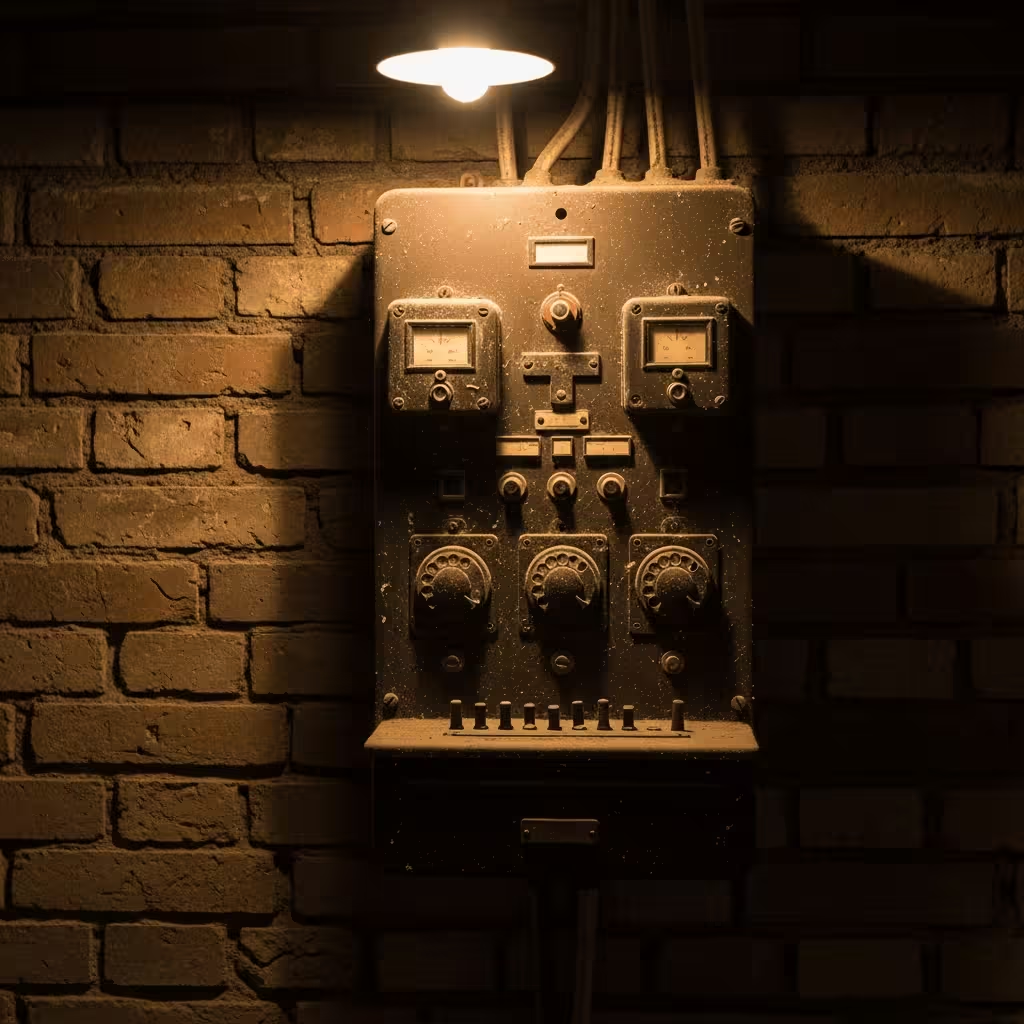
- Ceramic fuses with rewirable fuse wire. If you have ever rewired a fuse with a strand of wire, your board predates modern protection entirely.
- No RCD protection. This is the single biggest safety gap on an older board.
- Breakers that trip repeatedly. Nuisance tripping usually means a fault or an overloaded circuit, not a faulty breaker.
- Buzzing, heat, or a burning smell at the board. Stop and call an electrician the same day.
- No room for another circuit. A full board is why a heat pump or an EV charger installation sometimes turns into a switchboard job.
For a fuller walkthrough, read our guide to the signs of an outdated switchboard, and if you own a pre-1980s property, what a switchboard upgrade does for an older Christchurch home.
Can You Replace a Switchboard Yourself in NZ?
No. Switchboard work is prescribed electrical work under New Zealand law and must be carried out by a registered electrician. The homeowner exemptions that allow some minor work on your own property do not extend to the switchboard or to anything involving the mains.
Beyond the legal position, there is an insurance one. Uncertified electrical work is a common reason for a declined claim after a fire. The money saved doing it yourself is not close to the exposure.
Why Your Quote Might Be Higher Than This
These ranges describe a typical job. Plenty of real jobs sit outside them, and it is better to know why before you compare quotes.
- Circuit count. A four bedroom house with a heat pump, oven and a supply to a sleepout can run 15 to 20 circuits against 6 to 8 in a small unit. That alone can move a quote by $800.
- RCBOs instead of grouped RCDs. Better fault isolation, more units to buy and terminate.
- Mains work. If the job touches the mains it is high-risk prescribed electrical work and needs an independent inspector, which is a real line on the invoice.
- The meter box. A new board is usually larger than the one it replaces. If the box has to be enlarged or replaced, that is carpentry and weatherproofing on top.
- Asbestos. Older backing panels need testing, and controlled removal if positive.
- Access. A board in a subfloor, behind a wardrobe or high on an exterior wall takes longer, sometimes with a second person.
A quote above these ranges is not automatically expensive. A quote below them may be leaving out the certificate, the inspection, or making good afterwards. Ask what is included before you compare.
How to Keep the Cost Down
- Bundle it with other work. One callout, one setup, one power-off. If a rewire, a heat pump, or an EV charger is on the list, do the board at the same time.
- Book it before it fails. Planned work sits in the standard range. Emergency replacement runs $2,500 to $4,500.
- Get three quotes, and compare what is in them. Ask each electrician in writing whether the price includes the Certificate of Compliance, the independent inspection if required, and making good afterwards.
- Do not pay for circuits you do not need. A board sized for future expansion is sensible. A board sized for a workshop you are not building is not.
- Ask about RCBOs honestly. They cost more. On a small flat the benefit is modest. On a family home with a garage and an outdoor supply, they usually earn the difference back the first time something trips.
- Keep it maintained afterwards. Testing RCDs and checking connections as part of regular electrical maintenance is far cheaper than replacing a board that has quietly cooked itself.
Why Choose BT Electrical Solutions for Switchboard Upgrades in Christchurch
We quote switchboard upgrades in Christchurch as a fixed price, with the certification included and stated on the quote rather than added later.
- Fixed-price quotes – the number on the quote is the number on the invoice
- Certification included – every job is certified, and we tell you upfront if an independent inspection is required
- Registered Christchurch electricians – local, and familiar with the housing stock and the older boards in it
- Clear about power-off time – you will know how long you are without power before we start
- Tidy finish – labelled circuits, so the next person who opens the board knows what they are looking at
Frequently Asked Questions
How much does a switchboard upgrade cost in NZ?
A standard residential switchboard upgrade costs $1,500 to $3,500 in New Zealand. Replacing ceramic fuses with circuit breakers sits at $1,500 to $2,000, a full upgrade including RCD protection runs $2,000 to $3,000, and larger homes needing extra circuits or RCBOs throughout reach $3,000 to $5,000. In Christchurch the typical range is $1,800 to $3,000.
How long does a switchboard upgrade take?
Most residential upgrades take 4 to 6 hours, and more complex jobs 6 to 8 hours. Your power will be off for most of that time. Three phase and commercial boards can take one to three days. If the meter box needs enlarging or asbestos is found, the job may be split across two visits.
Do I need an RCD on my switchboard in New Zealand?
RCD protection is required where a switchboard is altered or replaced, and modern practice is to protect all sub-circuits. If your existing board has no RCDs, an upgrade will add them. This is the main safety reason to replace an older board rather than simply repair it.
Does a switchboard upgrade need an independent inspection?
It does when the work counts as mains work, which is classified as high-risk prescribed electrical work under regulation 6A of the Electricity (Safety) Regulations 2010. In that case an electrical inspector who did not carry out the installation must inspect it and issue a Record of Inspection. Ask your electrician whether your job falls into this category, because it affects the price.
Can I replace my own switchboard in New Zealand?
No. Switchboard work is prescribed electrical work and must be done by a registered electrician. Homeowner exemptions for minor electrical work do not cover switchboards or mains. Uncertified work is also a common reason for insurers to decline a fire claim.
Is a switchboard upgrade worth it before selling a house?
Often yes, on two counts. An old board with ceramic fuses and no RCDs is something buyers and their builders notice, and it can become a negotiating point worth more than the upgrade itself. It also removes a safety issue you would otherwise be passing on knowingly.
What is the difference between a switchboard and a fuse box?
They do the same job, which is distributing power around the house and cutting it when something goes wrong. A fuse box is the older version, using rewirable ceramic fuses that melt to break the circuit. A modern switchboard uses circuit breakers that switch off and reset, plus RCDs that detect current leaking to earth and disconnect fast enough to prevent a serious shock.
Will a switchboard upgrade lower my power bill?
No, not directly. A new board does not use less electricity than an old one. What it does is let you run modern appliances safely and add circuits for things like heat pumps and EV chargers, which is where the actual savings come from.