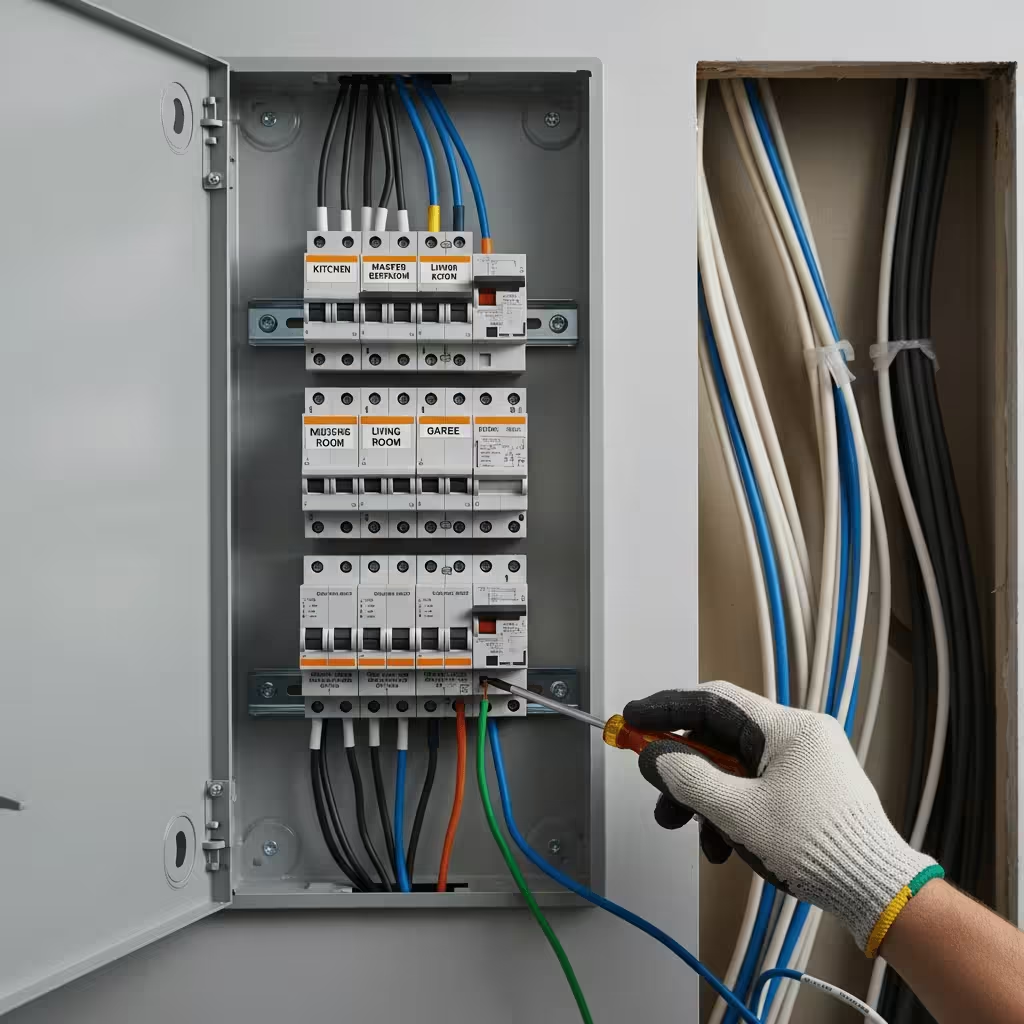
Quick Answer: A full house rewire in New Zealand costs between $8,000 and $30,000+ depending on the size of your home. A standard 3-bedroom house in Christchurch typically costs $12,000 to $18,000, while larger or older properties can exceed $30,000 with switchboard upgrades and consent fees included.
What’s in This Guide
- House Rewiring Costs in NZ (2026 Prices)
- Factors That Affect Rewiring Costs
- Room-by-Room Cost Breakdown
- Signs Your House Needs Rewiring
- The Rewiring Process: What to Expect
- How to Save Money on House Rewiring
- Why Choose BT Electrical Solutions
- Frequently Asked Questions
House Rewiring Costs in New Zealand (2026 Prices)
The cost to rewire a house in NZ depends primarily on the number of bedrooms and the age of the property. Below is a breakdown of typical pricing based on current Christchurch rates.
| House Size | Typical Cost (NZD) | Timeframe |
|---|---|---|
| 2-bedroom unit or flat | $8,000 – $12,000 | 3-5 days |
| 3-bedroom house | $12,000 – $18,000 | 5-8 days |
| 4-bedroom house | $16,000 – $25,000 | 7-10 days |
| 5+ bedroom or multi-storey | $22,000 – $35,000+ | 10-15 days |
These prices include labour, materials (TPS cabling, new outlets and switches), and basic testing and certification. They do not include switchboard upgrades, building consent, or any remedial building work like replastering after cable runs.
Additional Costs to Budget For
| Item | Cost Range (NZD) |
|---|---|
| Switchboard upgrade (with RCDs/RCBOs) | $1,500 – $3,500 |
| Building consent (if required) | $300 – $800 |
| Asbestos testing/removal | $500 – $2,000+ |
| Plaster and paint repair | $1,000 – $3,000 |
| Electrical inspection and compliance certificate | $200 – $400 |

Factors That Affect Rewiring Costs
No two rewiring jobs are the same. Here are the main factors that determine what you will pay.
House Size and Number of Circuits
A larger home means more cable runs, more power points, and more circuits back to the switchboard. A 2-bedroom flat might have 6 to 8 circuits, while a 4-bedroom house could need 15 to 20. Each additional circuit adds $400 to $800 in materials and labour.
Age and Condition of Existing Wiring
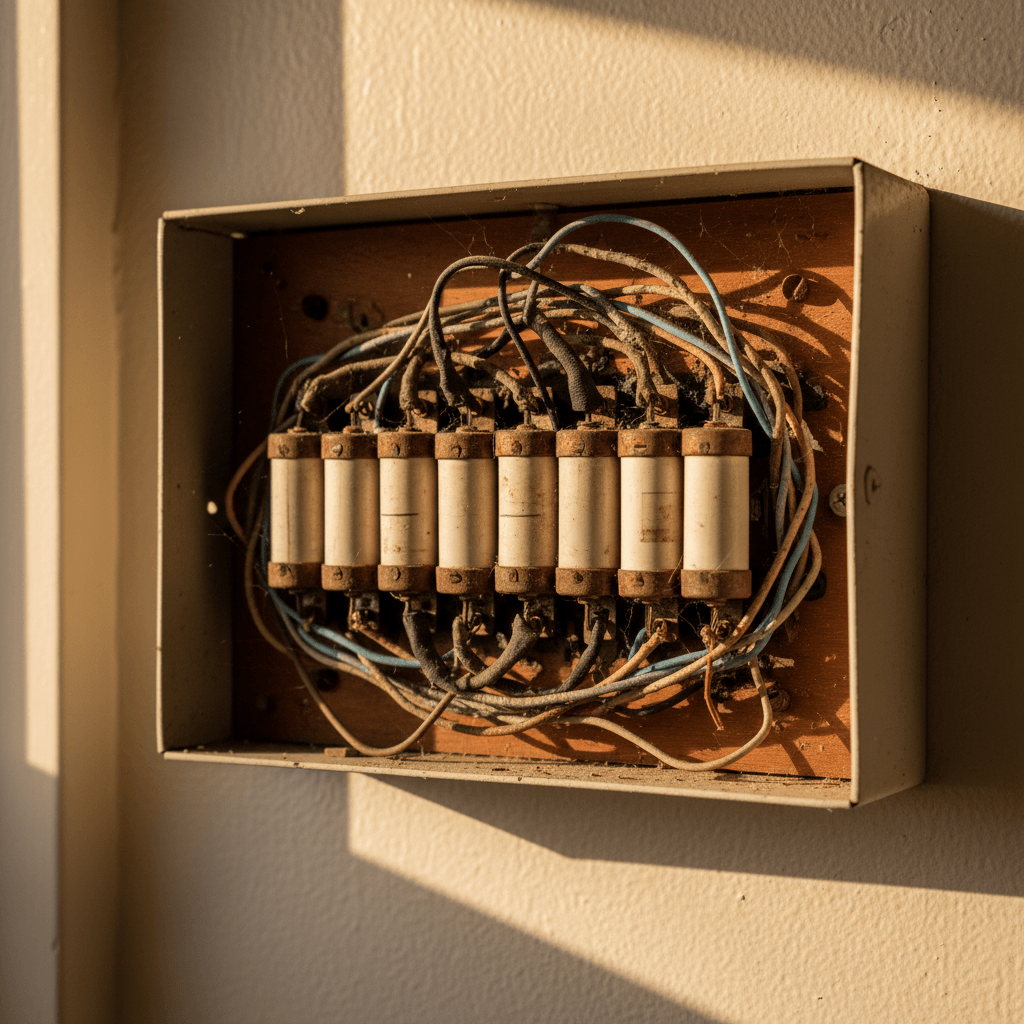
Homes built before the 1980s in New Zealand often have rubber-insulated or even cloth-wrapped cabling that has deteriorated over time. Some older Christchurch properties still have aluminium wiring, which is a fire risk and must be completely replaced. Removing old wiring from tight cavities takes significantly longer than running new cables through open framing.
Single-Storey vs Multi-Storey
Multi-storey homes are more expensive to rewire because electricians need to route cables between floors. This often means cutting into ceilings and walls, which adds both labour time and the cost of repairs afterwards. Expect a 20-30% premium for two-storey properties compared to single-level homes of the same size.
Switchboard Condition
If your switchboard still uses ceramic fuses or an old-style fuse board, it will need upgrading to a modern unit with RCDs (residual current devices) and circuit breakers. This is often required under current NZ electrical regulations, even if you are only doing a partial rewire. A switchboard upgrade typically adds $1,500 to $3,500 to the total cost.
Building Consent Requirements
Under NZ building regulations, a full house rewire is classified as restricted building work and requires a building consent from your local council. In Christchurch, the consent process through CCC typically costs $300 to $800 and can take 2 to 4 weeks. Your electrician should handle the consent application as part of the project.
Room-by-Room Cost Breakdown
If you are considering a partial rewire or want to understand where the money goes in a full rewire, here is a breakdown by room type.
| Room | Typical Cost (NZD) | Why It Costs More/Less |
|---|---|---|
| Kitchen | $2,500 – $5,000 | Multiple dedicated circuits for oven, dishwasher, rangehood |
| Bathroom | $1,500 – $3,000 | Special zones, extractor fan, heated towel rail, underfloor heating |
| Bedroom | $1,000 – $2,000 | Standard lighting and power points |
| Living room | $1,500 – $3,000 | Multiple power points, data cabling, lighting circuits |
| Garage/workshop | $800 – $2,000 | May need 3-phase for workshop equipment |
| Laundry | $600 – $1,200 | Dedicated circuit for dryer, standard for washer |

Signs Your House Needs Rewiring
Not every home needs a full rewire. But if you notice any of the following warning signs, it is worth getting an electrical inspection to assess the condition of your wiring.
- Frequent circuit breaker trips or blown fuses – this often indicates overloaded or deteriorating circuits
- Flickering or dimming lights – especially when appliances turn on, which points to inadequate wiring capacity
- Discoloured or warm power outlets – a sign of loose connections or arcing behind the wall
- Burning smell with no obvious source – potentially overheating wiring inside walls
- Two-pin outlets or no earth wiring – common in pre-1970s NZ homes and a serious safety risk
- Rubber or cloth-covered cables – if you can see old-style wiring in the roof space or basement, the rest of the house likely has the same
- Your home is 40+ years old and has never been rewired – wiring has a practical lifespan of 25 to 40 years
- Insurance company has flagged your wiring – some NZ insurers require an electrical safety certificate for older properties
The Rewiring Process: What to Expect
Knowing what happens during a rewire helps you plan around the disruption and avoid surprises on the invoice.
1. Inspection and Quote
A qualified electrician inspects your home to assess the existing wiring, identify any hazards, and determine the scope of work. This is usually free. You should get at least two to three quotes from licensed electricians in Christchurch to compare pricing and approach.
2. Planning and Consent
For a full rewire, your electrician will prepare plans showing the new circuit layout, power point locations, and switchboard configuration. If building consent is required, this gets submitted to Christchurch City Council. Your electrician should handle this process for you.
3. Installation
The old wiring is removed and new TPS (thermoplastic sheathed) cabling is run throughout the house. This involves working in the roof space, under floors, and through wall cavities. Power will be off for parts of each day, though a good electrician will maintain temporary supply to essential areas where possible.
4. Testing, Certification and Sign-Off
Once installation is complete, every circuit is tested for correct polarity, insulation resistance, and earth continuity. Your electrician issues an Electrical Safety Certificate (ESC) and, if consent was required, the council does a final inspection. You will receive documentation to keep with your property file and provide to insurers.
How to Save Money on House Rewiring
A full rewire is a significant investment, but there are practical ways to reduce the cost without compromising safety.
- Combine with other renovation work. If you are already renovating (new kitchen, bathroom, or re-cladding), the walls and ceilings may already be open, saving significant labour on access.
- Plan your power point layout carefully. Every additional double outlet costs $80 to $150 installed. Think about what you actually need rather than adding outlets everywhere “just in case.”
- Get multiple quotes. Prices can vary 20-40% between electricians in Christchurch for the same scope of work. Always compare like-for-like quotes.
- Do your own plaster repairs. If you are handy, handling the cosmetic repair work after the electrician finishes can save $1,000 to $3,000.
- Consider a staged approach. If budget is tight, your electrician may be able to prioritise the most urgent areas (kitchen, bathroom, switchboard) and schedule the remaining rooms later.
Why Choose BT Electrical Solutions
BT Electrical Solutions has been helping Christchurch homeowners with home rewiring projects for years. We know the local building consent process inside out and work closely with Christchurch City Council to keep your project on track.
Every quote we provide is detailed and transparent, so there are no surprises when the invoice arrives. We use quality materials from trusted NZ suppliers and back all our work with a workmanship guarantee. Our team is fully licensed, registered with the Electrical Workers Registration Board, and carries full liability insurance.
Whether you need a full rewire for a character home in Merivale, a partial upgrade in Riccarton, or just a professional opinion on whether your wiring needs replacing, we are happy to help.
Frequently Asked Questions
How much does it cost to rewire a 3-bedroom house in NZ?
A standard 3-bedroom house typically costs $12,000 to $18,000 NZD for a full rewire. This includes new TPS cabling, outlets, switches, and testing. Add $1,500 to $3,500 if the switchboard also needs upgrading, plus $300 to $800 for building consent if required.
Why does rewiring an old house cost more?
Older homes often have wiring in difficult-to-access locations, asbestos-containing materials that need careful handling, and non-standard layouts that require more labour. The existing wiring may also be harder to remove, and the switchboard almost always needs a complete replacement.
Can you stay in your house while it is being rewired?
For a partial rewire or smaller home, yes. Power will be off in sections during the day but restored each evening. For a full rewire of a larger home, some homeowners find it easier to stay elsewhere for the first few days when the majority of the disruptive work happens.
How long does a full house rewire take?
A 3-bedroom house typically takes 5 to 8 working days. Larger homes or those with difficult access can take 10 to 15 days. This does not include time for building consent processing (2 to 4 weeks) or cosmetic repairs afterwards.
Do I need building consent for a rewire in NZ?
A full house rewire is classified as restricted building work under the Building Act and typically requires consent. Minor electrical work like replacing outlets or adding a circuit may not. Your electrician will advise whether consent is needed for your specific project.
Do I need to upgrade the switchboard when rewiring?
In most cases, yes. If your switchboard uses old ceramic fuses or does not have RCD protection, current NZ regulations require it to be upgraded as part of a rewire. Modern switchboards with RCBOs provide individual circuit protection and are much safer.
Is house rewiring covered by insurance?
Standard home insurance does not cover the cost of upgrading or replacing wiring due to age. However, if wiring was damaged by an insured event (such as an earthquake or fire), your insurer may cover the rewiring as part of the repair. Check with your provider for specifics.
What are the signs that a house needs rewiring?
Common signs include frequent circuit breaker trips, flickering lights, discoloured outlets, a burning smell, two-pin (unearthed) outlets, and visible rubber or cloth-covered cables. If your home is over 40 years old and has never been rewired, an electrical inspection is strongly recommended.