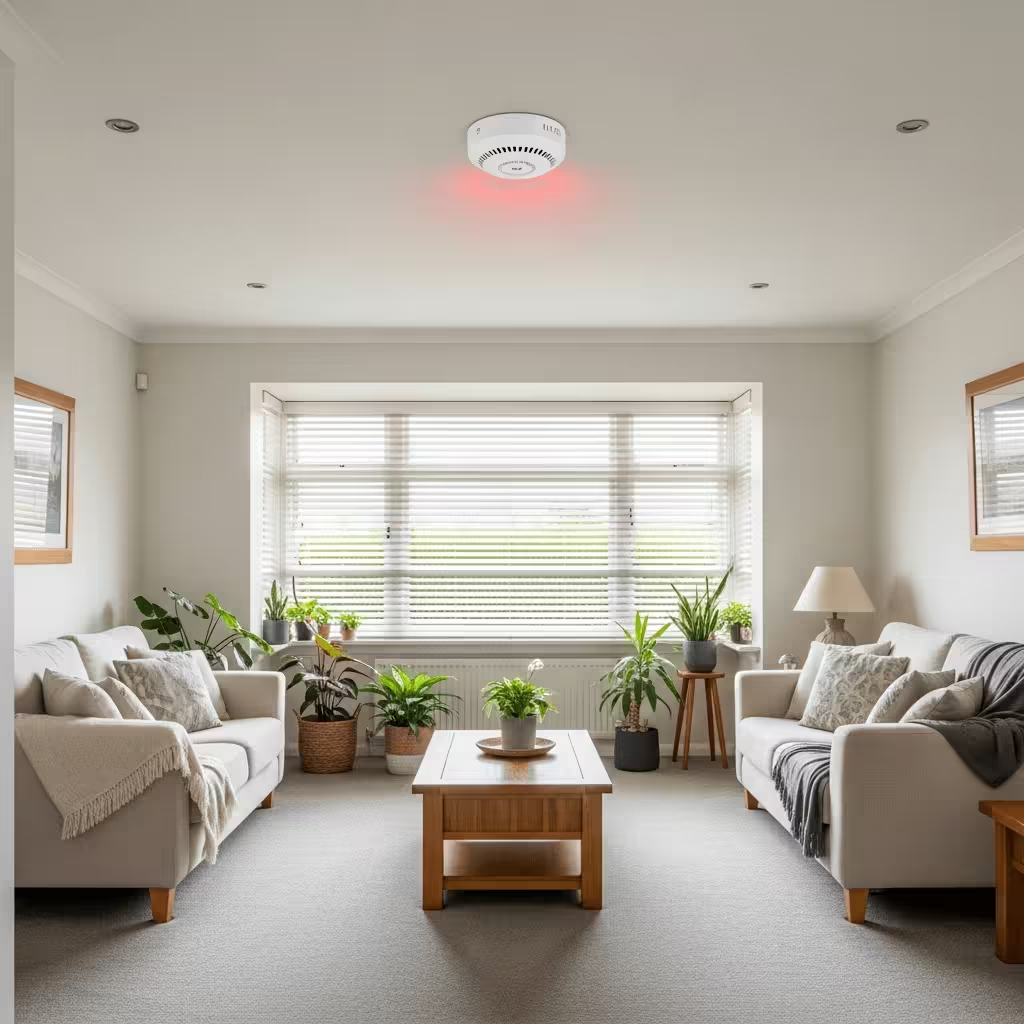
Quick Answer: The best smoke alarms in NZ for most homes are long-life photoelectric models with a sealed 10-year lithium battery. If you have a multi-storey home or want whole-house coverage, wireless interconnected smoke alarms are the way to go — and they’re now required in all new NZ builds. Cavius, Orca, and PDL Wiser are the top brands available at Bunnings and Mitre 10.
What’s in This Guide
- Types of Smoke Alarms Explained
- Best Smoke Alarms NZ — Our Top Picks
- Interconnected Smoke Alarms: Do You Need Them?
- How to Choose the Right Alarm for Your Home
- NZ Smoke Alarm Requirements in 2026
- Why Choose BT Electrical
- FAQs
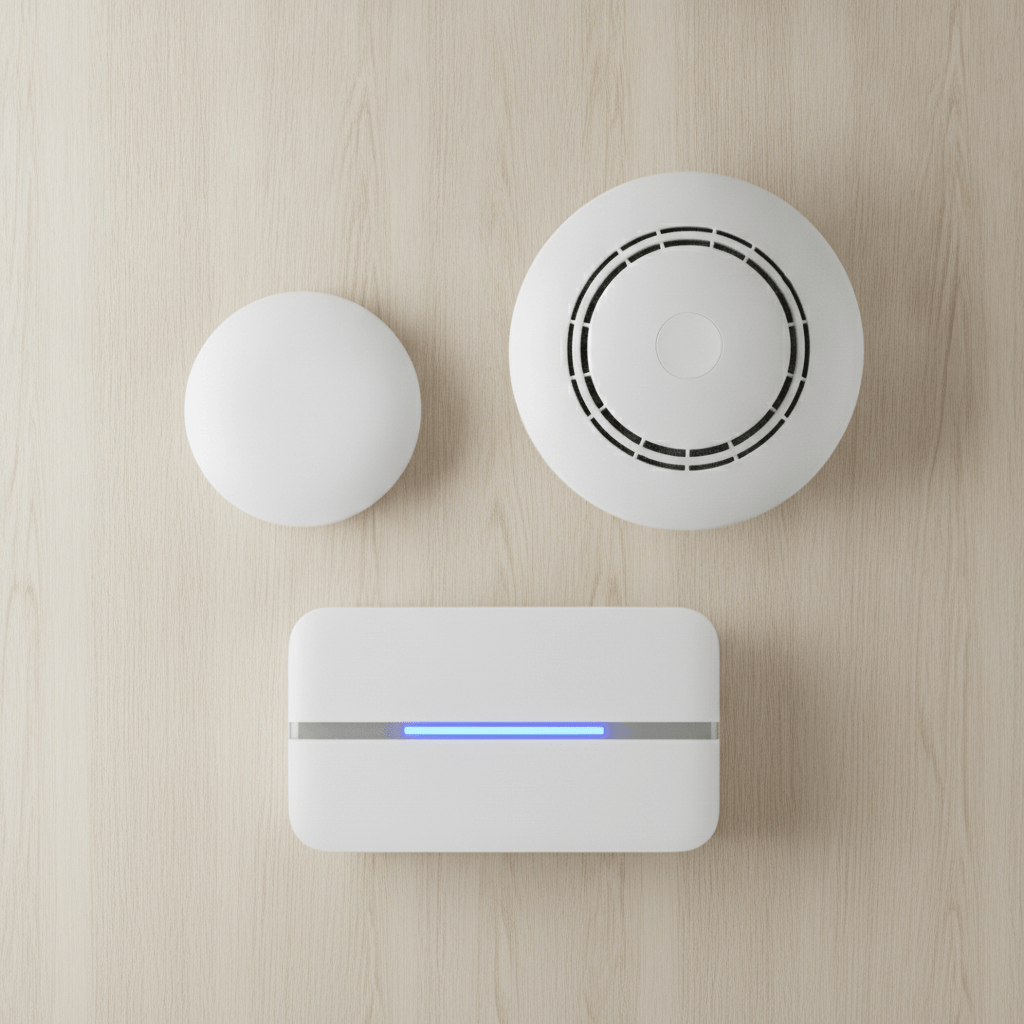
Types of Smoke Alarms Explained
Not all smoke alarms work the same way. The sensor type determines what kinds of fires the alarm detects fastest — and how many false alarms you’ll deal with in the kitchen.
| Type | How It Works | Best For | Drawbacks |
|---|---|---|---|
| Photoelectric | Uses a light beam — smoke scatters the light onto a sensor | Smouldering fires (furniture, wiring, bedding) | Slightly slower for fast-flaming fires |
| Ionization | Uses radioactive material to detect smoke particles in the air | Fast-flaming fires (paper, cooking oil) | Prone to false alarms from cooking and steam |
| Dual Sensor | Combines both photoelectric and ionization sensors | Broadest coverage in one unit | More expensive, not always necessary |
| Heat Detector | Triggers when temperature exceeds a threshold | Kitchens, garages, laundries (where smoke alarms false-alarm) | Does not detect smoke — slower to respond |
What NZ fire services recommend: Fire and Emergency NZ recommends photoelectric smoke alarms for residential use. They’re the required type for rental properties and the standard choice for new builds. Ionization alarms are being phased out in most NZ homes because of their false alarm rate.
Best Smoke Alarms NZ — Our Top Picks
We’ve broken down the best smoke alarms available in New Zealand by category. All of these are sold at major NZ retailers and meet the AS 3786 standard required under NZ regulations.
Best Overall: Cavius 10-Year Photoelectric
Cavius is the most searched smoke alarm brand in New Zealand for good reason. Their 10-year sealed lithium battery photoelectric alarms are compact, reliable, and available at both Bunnings and Mitre 10. The sealed battery means no annual battery changes — install it and forget it for a decade.
- Price: ~$56 each (Mitre 10)
- Battery: 10-year sealed lithium (non-replaceable)
- Sensor: Photoelectric
- Interconnection: Wireless models available
- Best for: Most NZ homes
Best Budget: CodeRED 10-Year Photoelectric
If you need multiple alarms on a tight budget, CodeRED from The Warehouse offers solid photoelectric protection with a 10-year sealed battery at a fraction of the Cavius price.
- Price: ~$20 each / ~$37 for a 2-pack (The Warehouse)
- Battery: 10-year sealed lithium
- Sensor: Photoelectric
- Interconnection: No
- Best for: Budget-conscious homeowners, rental compliance
Best Interconnected: Cavius Wireless Family
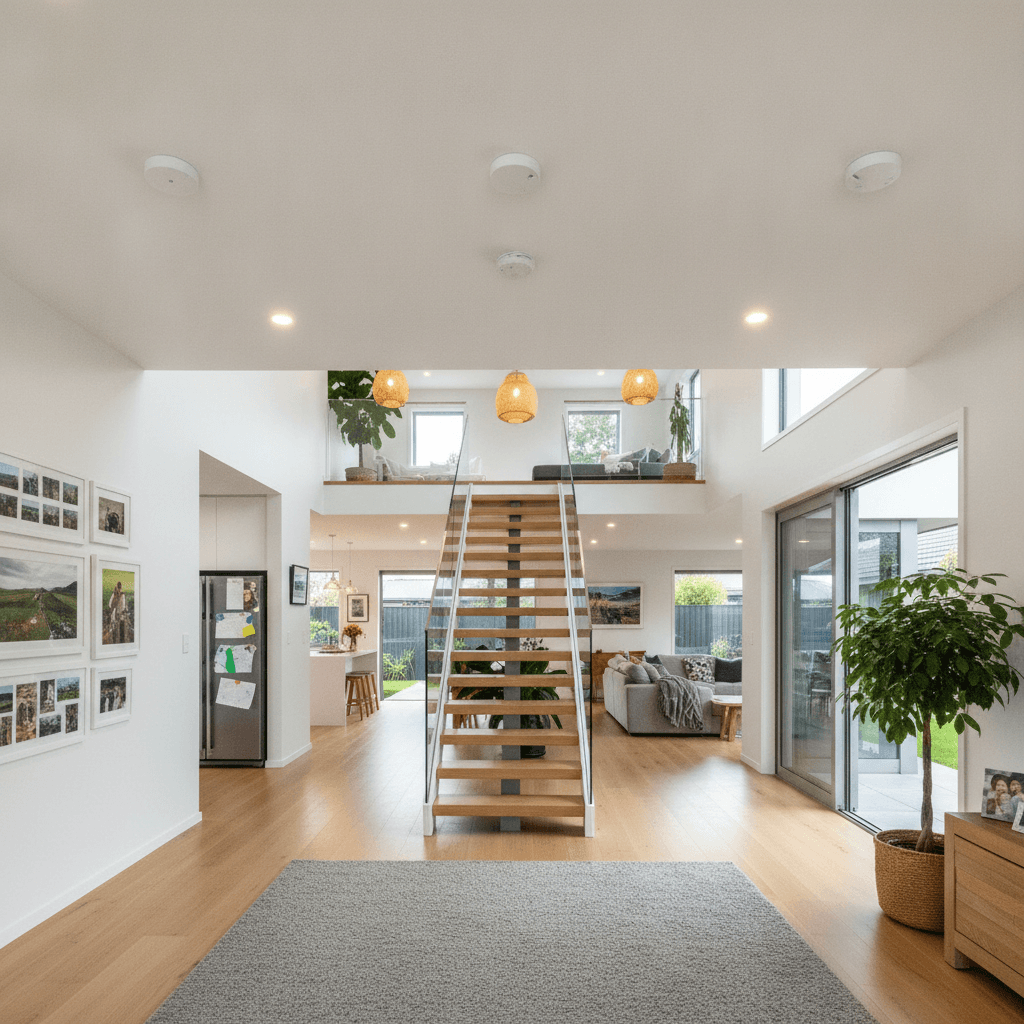
For multi-storey homes or larger properties, the Cavius wireless interconnected range lets all your alarms communicate. When one detects smoke, every alarm in the house sounds simultaneously — no wiring required between units.
- Price: ~$109 each / ~$95 per unit in packs (Bunnings/Mitre 10)
- Battery: 10-year sealed lithium
- Sensor: Photoelectric
- Interconnection: Yes — wireless RF
- Best for: Multi-storey homes, large homes, families with young children
Best Hardwired: Arma 240V Interconnectable
If you’re building new or renovating, hardwired alarms are the most reliable option. The Arma 240V connects directly to your mains power with battery backup, and can be wired together for whole-house interconnection.
- Price: ~$75 per unit (Bunnings) + electrician installation
- Power: 240V mains with 9V battery backup
- Sensor: Photoelectric
- Interconnection: Yes — hardwired
- Best for: New builds, renovations, permanent installations
Best Smart Option: PDL Wiser Smoke Alarm
PDL’s Wiser range integrates with their smart home ecosystem. These alarms connect via Zigbee and can send phone notifications when triggered. They also work as part of a broader PDL Wiser smart home setup with sensors and switches.
- Price: ~$80–$100 each
- Battery: 10-year sealed lithium
- Sensor: Photoelectric
- Interconnection: Yes — wireless (Zigbee)
- Best for: Smart home setups, tech-savvy homeowners
Quick Comparison Table
| Alarm | Price | Battery Life | Interconnected | Best For |
|---|---|---|---|---|
| Cavius 10-Year | ~$56 | 10 years | No | Most homes |
| CodeRED 10-Year | ~$20 | 10 years | No | Budget option |
| Cavius Wireless | ~$109 | 10 years | Yes (wireless) | Multi-storey homes |
| Arma 240V | ~$75 + install | Mains powered | Yes (wired) | New builds |
| Orca Wireless | ~$87/2-pack | 10 years | Yes (wireless) | Value interconnected |
| PDL Wiser | ~$80–$100 | 10 years | Yes (Zigbee) | Smart homes |
Interconnected Smoke Alarms: Do You Need Them?
Interconnected smoke alarms are the biggest change in NZ fire safety in recent years. Since November 2024, all new residential building consent applications must include interconnected smoke alarms under the updated NZ Building Code (referencing NZS 4514:2021).
But what about existing homes?
How Interconnected Alarms Work
Each alarm contains a wireless transmitter. When one alarm detects smoke, it sends a radio signal to every other alarm in the network. All alarms then sound at the same time — so a fire that starts downstairs will wake you upstairs immediately.
Wired vs Wireless Interconnection
| Feature | Hardwired | Wireless |
|---|---|---|
| Installation | Requires licensed electrician | DIY — mount and pair |
| Cost (3-alarm system) | $450–$800 installed | $260–$330 (self-install) |
| Reliability | Most reliable — mains powered with battery backup | Reliable — 10-year sealed batteries |
| Best for | New builds, major renovations | Existing homes, retrofits |
When You Should Get Interconnected Alarms
- Multi-storey home: A standalone alarm in the basement won’t wake you on the second floor
- Large single-storey home: If bedrooms are far from the kitchen or living areas
- Building or renovating: It’s now a Building Code requirement
- Young children or elderly family: Every second counts — simultaneous alerts across the house save lives
For existing single-storey homes with bedrooms close to the main living areas, standalone alarms in every required location will still provide adequate protection.
How to Choose the Right Smoke Alarm for Your Home
With dozens of options on the shelf, here’s a simple decision framework:
Step 1: Count How Many You Need
At minimum, you need alarms within 3 metres of every bedroom door and on every level of your home. For a typical 3-bedroom single-storey house, that’s usually 2–3 alarms. For a two-storey, 4–5. Check our guide on how many smoke alarms you need for detailed room-by-room placement.
Step 2: Choose Your Power Source
- 10-year sealed battery: Best for most existing homes. Install and forget. Replace the entire unit after 10 years.
- Replaceable 9V battery: Cheapest upfront ($10–$15) but you’ll need to replace the battery annually. Easy to neglect.
- Hardwired (240V): Most reliable. Runs off mains power with battery backup. Requires an electrician to install.
Step 3: Standalone or Interconnected?
If your home is single-storey and compact, standalone alarms are fine. If you have multiple levels, a large floorplan, or you’re doing building work, go interconnected.
Step 4: Check the Expiry
All smoke alarms have a use-by date — usually 10 years from manufacture. When buying, check the date on the packaging. An alarm that’s been sitting on the shelf for 2 years only has 8 years of life left.
NZ Smoke Alarm Requirements in 2026
New Zealand has two sets of smoke alarm rules depending on your situation:
Rental Properties
- Smoke alarms must be photoelectric
- Must have a minimum 8-year battery life or be hardwired
- Placed within 3 metres of every bedroom door (or inside sleeping rooms)
- At least one alarm on every level with habitable space
- Must be working at the start of each tenancy
For a full breakdown of landlord obligations, see our smoke alarm requirements for rental properties guide.
New Builds (from November 2024)
- Smoke alarms must be interconnected (wired or wireless)
- Required in bedrooms, living spaces, hallways, and landings
- At least one alarm on every level
- Must comply with NZS 4514:2021 installation standard
- Product must meet AS 3786 manufacturing standard
Existing Owner-Occupied Homes
There’s no legal requirement for owner-occupied existing homes — but Fire and Emergency NZ strongly recommends following the same placement guidelines as rentals. A working smoke alarm gives you an average of 3 minutes to escape a house fire. Without one, you may get less than 30 seconds once you’re woken by heat or noise.
Why Choose BT Electrical for Smoke Alarm Installation
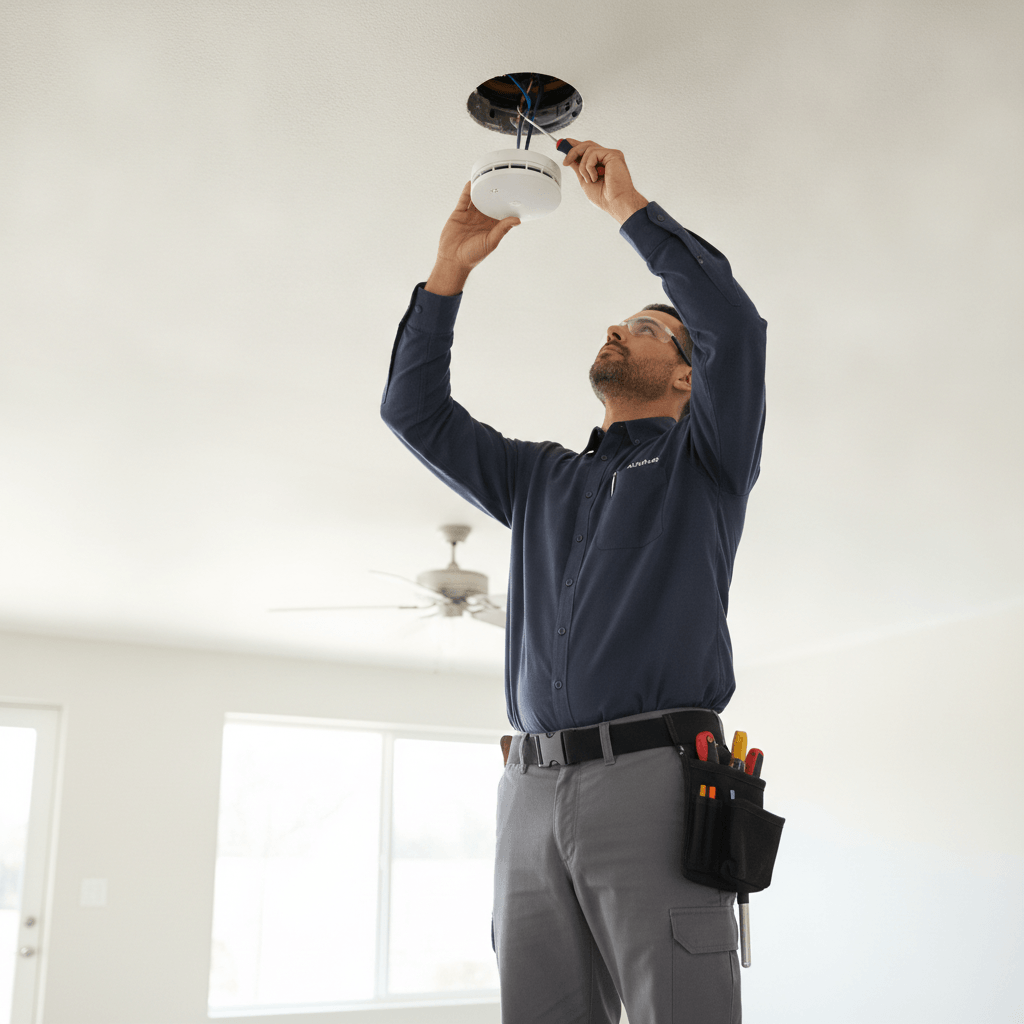
If you’re upgrading to hardwired or interconnected smoke alarms, you’ll need a licensed electrician. Our smoke alarm installation service in Christchurch covers everything from replacing outdated standalone alarms to installing full interconnected systems for multi-storey homes.
We handle the wiring, ensure correct placement to NZ Building Code standards, and test every unit before we leave. Whether it’s a single hardwired alarm for a sleep-out or a 6-zone interconnected system for a new build, we’ve got you covered.
Frequently Asked Questions
What type of smoke alarm is best for NZ homes?
Photoelectric smoke alarms are recommended by Fire and Emergency NZ and are the required type for rental properties. They detect smouldering fires faster and produce fewer false alarms from cooking than ionization models.
How long do smoke alarms last in NZ?
Most smoke alarms have a 10-year lifespan from the date of manufacture. After 10 years, the sensor degrades and the alarm should be replaced — even if it still beeps when you press the test button. Check the date printed on the back of your alarm.
Are interconnected smoke alarms worth it?
Yes, particularly for multi-storey or larger homes. When one alarm detects smoke, all connected alarms sound simultaneously. This means a fire in the kitchen will immediately alert you in an upstairs bedroom. They’re required in all new NZ builds since November 2024.
Can I install smoke alarms myself?
Battery-powered and wireless interconnected smoke alarms can be self-installed — just screw the mounting plate to the ceiling and clip the alarm on. Hardwired smoke alarms (240V) must be installed by a licensed electrician, as they connect to your home’s electrical wiring.
How much does it cost to have smoke alarms installed by an electrician?
For hardwired interconnected smoke alarms, expect to pay $150–$250 per alarm installed, including labour and materials. A full 3-bedroom home with 4–5 alarms typically costs $600–$1,200 depending on wiring complexity and how accessible your ceiling cavity is.
What’s the difference between a smoke alarm and a smoke detector?
In everyday use, they mean the same thing. Technically, a smoke detector is the sensing component, while a smoke alarm includes both the detector and the built-in sounder. For residential use in NZ, they’re interchangeable terms.