Quick Answer: An RCD (Residual Current Device) is a safety switch that monitors the flow of electricity through a circuit and instantly cuts power if it detects current leaking to earth — such as through a person’s body. RCDs are your most important protection against electric shock and electrical fires, and NZ regulations require them on most circuits in new installations. If your Christchurch home doesn’t have RCD protection, or your RCD keeps tripping, it’s time to call a licensed electrician.
What’s in This Guide
- What Is an RCD Safety Switch?
- How RCDs Protect Your Home
- RCD vs MCB vs RCBO: What’s the Difference?
- Types of RCDs
- Why Does My RCD Keep Tripping?
- RCD Testing Requirements in NZ
- Why Choose BT Electrical Solutions
- Frequently Asked Questions
What Is an RCD Safety Switch?
An RCD (Residual Current Device) — also called a safety switch or residual current circuit breaker — is a fast-acting electrical safety device installed in your switchboard. Its sole purpose is to protect people from electric shock and reduce the risk of electrical fires.
Here’s how it works in simple terms: an RCD constantly monitors the electrical current flowing out through the active wire and returning through the neutral wire. In a healthy circuit, these two values are equal. If the RCD detects even a tiny difference — as small as 30 milliamps (0.03 amps) — it assumes current is leaking somewhere it shouldn’t be, and it cuts the power within 30 milliseconds.
That “somewhere it shouldn’t be” could be through a person’s body, through damaged wiring insulation, or into water. The RCD doesn’t know why there’s a difference — it just knows something is wrong and shuts down the circuit before anyone gets hurt.
To put that speed into perspective: 30 milliseconds is faster than the blink of an eye. A potentially fatal electric shock can occur in as little as 200 milliseconds, so the RCD’s response time provides a critical safety margin.
How RCDs Protect Your Home
RCDs provide protection that standard circuit breakers and fuses simply cannot. Here’s what they guard against:
Electric shock. If you accidentally touch a live wire, use a faulty appliance, or a child pokes something into a power outlet, the RCD detects the current flowing through your body to earth and disconnects the circuit almost instantly. This is the primary life-saving function.
Earth leakage faults. Damaged cable insulation, moisture in wiring, or deteriorating connections can cause small amounts of current to leak to earth. Over time, these faults generate heat and can ignite surrounding materials. RCDs detect these leaks before they become dangerous.
Electrical fires. While RCDs aren’t specifically designed as fire protection devices, their ability to detect earth leakage faults means they catch many of the conditions that lead to electrical fires — particularly in older Christchurch homes where wiring may be decades old.
Outdoor and wet area hazards. Areas like bathrooms, kitchens, laundries, garages, and outdoor circuits are at higher risk of electrical faults due to moisture. NZ wiring rules require RCD protection on these circuits specifically because the risk of electric shock is elevated.
RCD vs MCB vs RCBO: What’s the Difference?
Your switchboard likely contains several types of protective devices. Understanding the difference helps you know what’s actually protecting you:
MCB (Miniature Circuit Breaker) — This is what most people think of as a “circuit breaker.” An MCB protects against overloads and short circuits. If you plug too many appliances into one circuit or a wire short-circuits, the MCB trips to prevent the wiring from overheating and starting a fire. However, an MCB does not protect against electric shock. It only reacts to excessive current — not to the small leakage currents that indicate someone is being electrocuted.
RCD (Residual Current Device) — As described above, an RCD protects against earth leakage and electric shock. It detects tiny imbalances in current flow and disconnects the circuit. However, a standard RCD does not protect against overloads or short circuits on its own.
RCBO (Residual Current Breaker with Overcurrent) — An RCBO combines both functions — earth leakage protection AND overload/short circuit protection in a single device. RCBOs are the gold standard for modern switchboards because they provide complete protection on each individual circuit. If one circuit trips, the others stay on.
In older Christchurch switchboards, you might find a single RCD protecting multiple circuits, with individual MCBs for each circuit downstream. In modern installations, particularly after a switchboard upgrade, individual RCBOs per circuit are increasingly common.
Types of RCDs
Not all RCDs are created equal. The type you need depends on what’s connected to the circuit:
Type AC — The most basic type. Detects sinusoidal (standard AC) earth leakage currents. Suitable for general household circuits like lighting and power outlets.
Type A — Detects both sinusoidal AC and pulsating DC earth leakage currents. Required for circuits supplying electronic equipment that could produce DC fault currents — including washing machines, dishwashers, and some modern appliances with electronic controls.
Type B — Detects AC, pulsating DC, and smooth DC earth leakage currents. Required for EV charger installations and certain three-phase equipment. If you’re having an EV charger installed in Christchurch, your electrician should specify a Type B RCD or equivalent protection.
Type S (Selective/Time-Delayed) — Has a built-in time delay so it trips after downstream RCDs. Used at the main switchboard to prevent a single fault from cutting power to the entire house. This ensures only the affected circuit trips while the rest of the home stays powered.
Why Does My RCD Keep Tripping?
An RCD that keeps tripping is doing its job — it’s detecting a fault somewhere on the circuit. The challenge is finding what’s causing it. Here are the most common reasons Christchurch homeowners call us about RCD tripping:
Faulty appliance. This is the number one cause. A washing machine, dishwasher, fridge, or electric oven with deteriorating insulation or a damaged element will leak current to earth. Test by unplugging appliances one at a time and resetting the RCD after each. When the tripping stops, you’ve found your culprit.
Moisture in wiring or outlets. Water and electricity don’t mix. After heavy rain, in damp conditions, or in poorly ventilated areas like garages and bathrooms, moisture can cause earth leakage. This is particularly common in older Canterbury homes with aging weatherproofing.
Damaged cable insulation. Rodent damage, nails through cables, UV-degraded outdoor wiring, or simply old wiring with brittle insulation can all cause current leakage. Suburbs with older housing stock — Linwood, Sydenham, Addington, St Albans — are more likely to have this issue.
Overloaded circuit. While RCDs aren’t designed to trip on overload (that’s the MCB’s job), an overloaded circuit can cause heating effects that lead to insulation breakdown and subsequent earth leakage.
Nuisance tripping. Some sensitive electronic equipment — particularly older computers, LED drivers, and variable speed drives — can produce small leakage currents that accumulate across multiple devices on the same RCD-protected circuit. The fix is usually to redistribute loads or install individual RCBOs.
The RCD itself is faulty. Like all electrical devices, RCDs have a lifespan. Mechanical wear, internal component failure, or manufacturing defects can cause false tripping. If testing confirms no fault on the circuit, the RCD may need replacement.
Important: If your RCD trips and won’t reset at all, do not force it. There is likely an active fault that needs professional diagnosis. Call a licensed electrician.
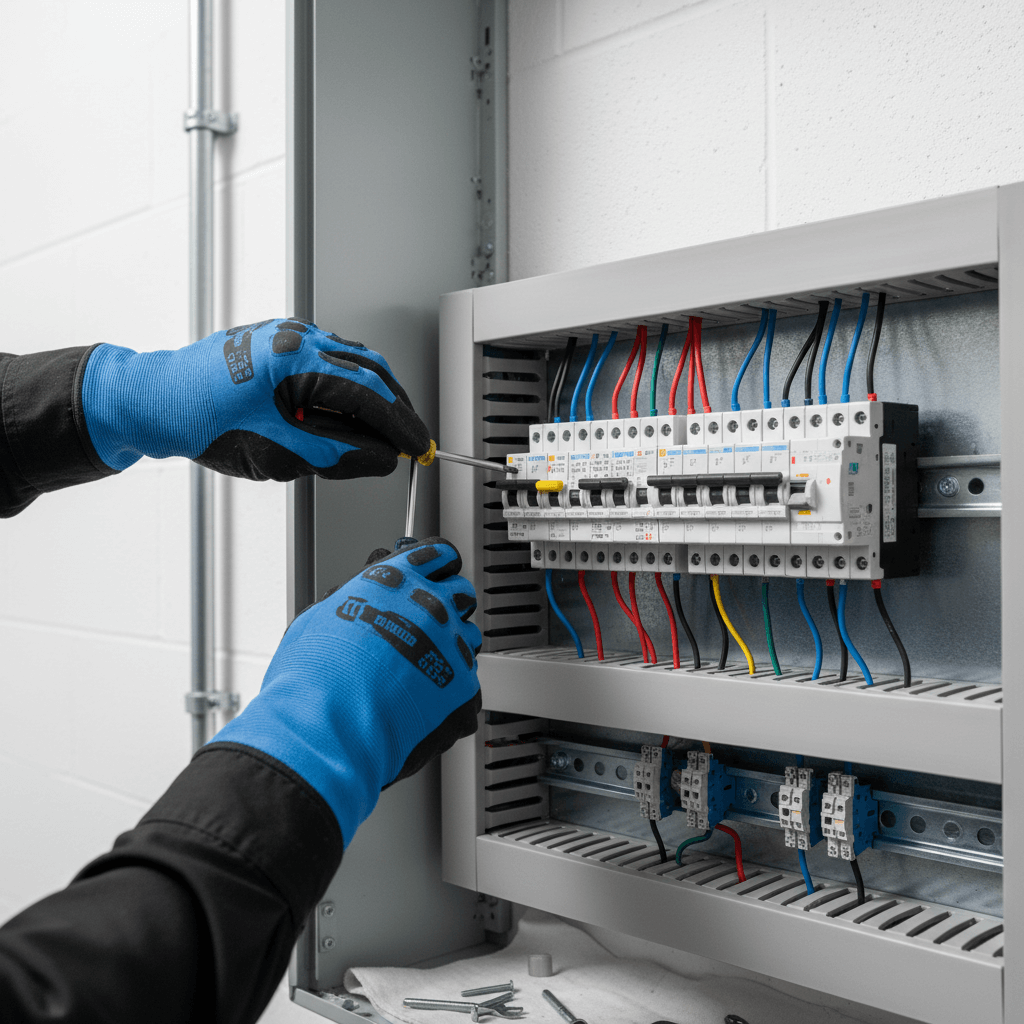
RCD Testing Requirements in NZ
NZ electrical standards require RCDs to be tested regularly to ensure they’re still functioning correctly. An RCD that doesn’t trip when it should is worse than no RCD at all — it gives a false sense of security.
Homeowner testing (push-button test):
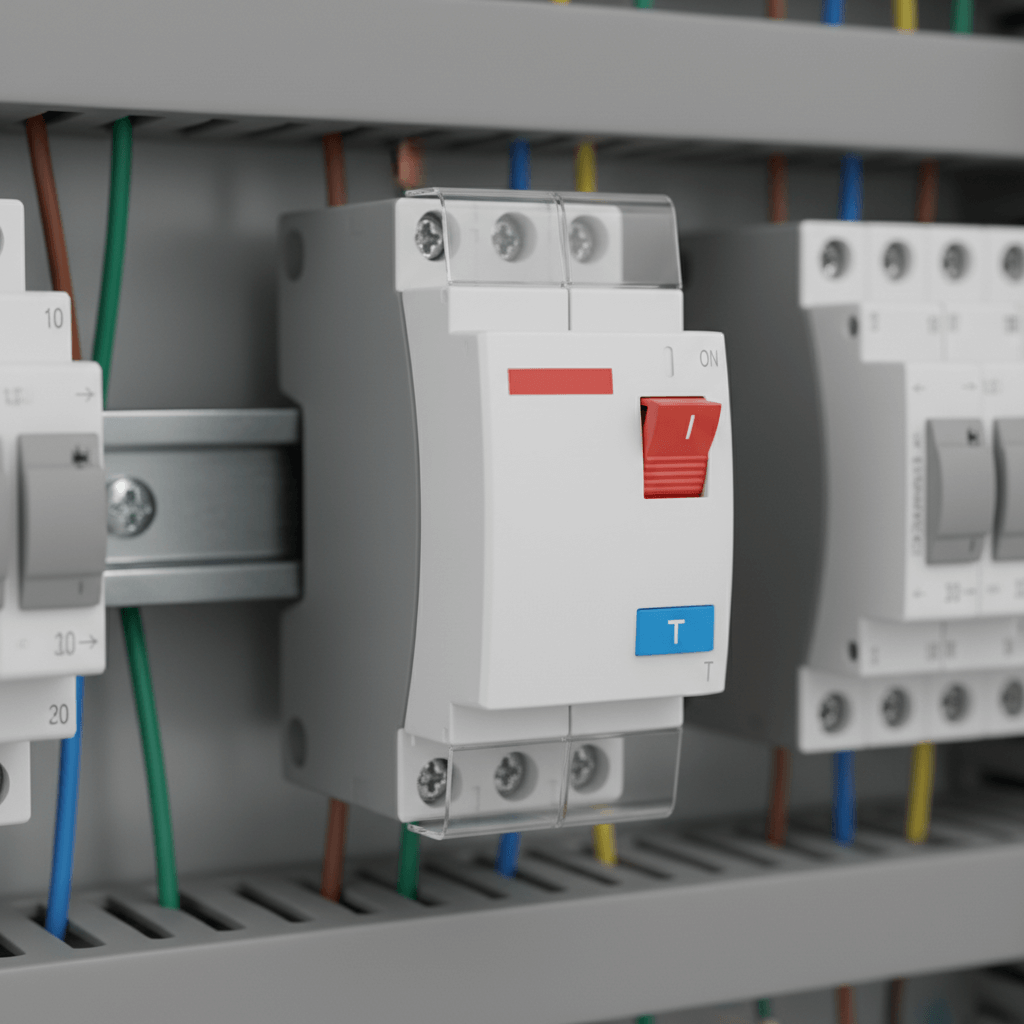
- Every RCD has a test button marked “T” on the front
- Press it — the RCD should trip immediately, cutting power to the circuits it protects
- If it doesn’t trip, the RCD has failed and must be replaced by a licensed electrician
- Recommended frequency: every 3 months
- After testing, simply switch the RCD back on
Professional testing:
- A licensed electrician uses specialised equipment to measure the RCD’s actual trip time and trip current
- The RCD must trip within 30 milliseconds at 30mA (for standard 30mA devices)
- Professional testing is recommended at every electrical inspection or as part of regular electrical maintenance
- For rental properties, RCD testing should be part of your pre-tenancy compliance checks
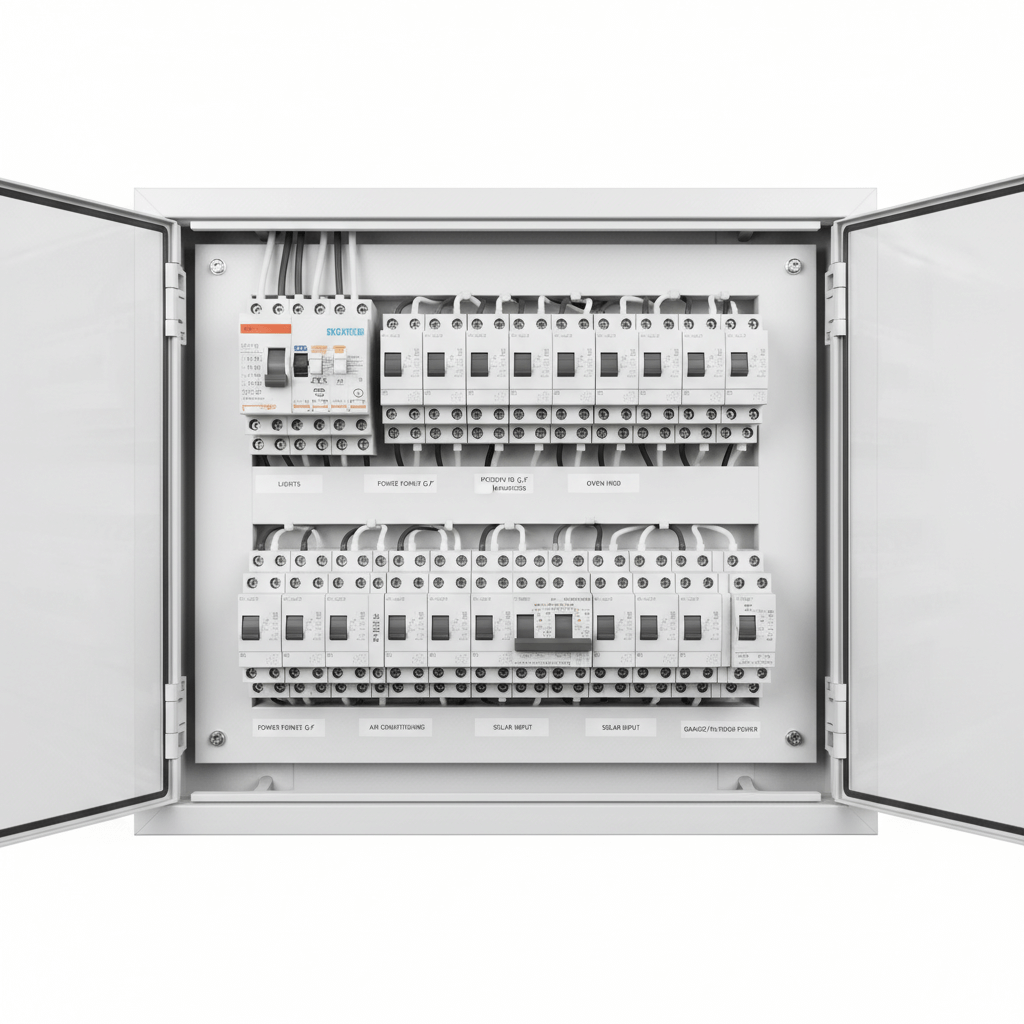
Many older Christchurch homes still have switchboards with no RCD protection whatsoever. If your switchboard pre-dates the 1990s, there’s a good chance you’re unprotected. A switchboard upgrade to include modern RCD or RCBO protection is one of the single most important electrical safety improvements you can make.
Why Choose BT Electrical Solutions
Whether you need RCD testing, a switchboard upgrade with modern RCBO protection, or fault-finding for an RCD that keeps tripping, our Christchurch team has you covered. We specialise in switchboard upgrades that bring older Canterbury homes up to current safety standards.
What Sets Us Apart
- Switchboard Specialists: We upgrade switchboards across Christchurch every week — from basic RCD retrofits to full RCBO-protected boards
- Fault-Finding Expertise: Persistent RCD tripping requires methodical diagnosis, not guesswork. We use professional testing equipment to pinpoint the exact fault
- EWRB Registered: Every installation comes with a Certificate of Compliance, and all work meets the current AS/NZS 3000 Wiring Rules
Frequently Asked Questions
What is the difference between an RCD and a circuit breaker?
A standard circuit breaker (MCB) protects against overloads and short circuits — it stops wires from overheating. An RCD protects against earth leakage and electric shock — it detects when current is flowing somewhere it shouldn’t, like through a person. They protect against different types of faults, which is why modern switchboards include both.
How often should I test my RCD?
Press the test button on your RCD every 3 months. It should trip immediately, cutting power to the protected circuits. If it doesn’t trip, call a licensed electrician — the device has failed and needs replacement. Professional testing with calibrated equipment is recommended during any electrical inspection.
Why does my RCD trip when it rains?
Moisture from rain can enter outdoor wiring, junction boxes, or external power outlets, causing current to leak to earth. This is especially common in older homes with aging outdoor wiring or poor weatherproofing. A licensed electrician can identify and waterproof the affected areas.
Can I just reset the RCD and ignore it?
If your RCD trips once and stays on after resetting, it may have been a transient fault (like a momentary moisture event). But if it trips repeatedly, there is an ongoing electrical fault that needs professional investigation. Repeatedly resetting a tripping RCD without finding the cause means you’re living with an active electrical hazard.
Do older homes in Christchurch have RCD protection?
Many older Christchurch homes — particularly those built before the 1990s — have switchboards with no RCD protection. These homes rely solely on fuses or MCBs, which provide zero protection against electric shock. A switchboard upgrade to include RCDs or RCBOs is one of the most important safety improvements for these properties.
What RCD type do I need for an EV charger?
EV chargers typically require Type B RCD protection (or Type A with additional DC fault detection) because the charger’s electronics can produce smooth DC fault currents that standard Type AC or Type A RCDs cannot detect. Your electrician should specify the correct protection as part of the EV charger installation.